


Learn how to live intentionally today to become a powerful and elevated ancestor for your...
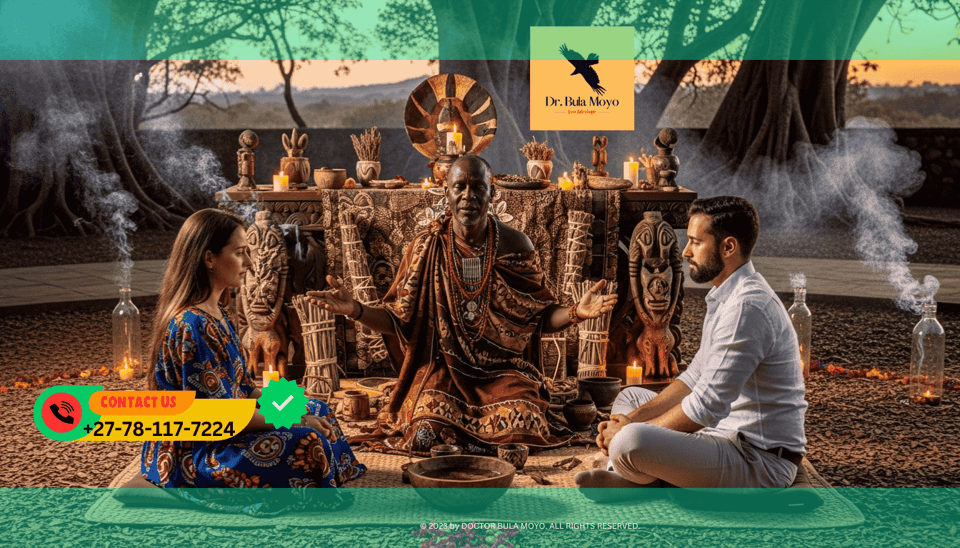
Explore the significance of ancestral feasts, their rituals, and how they strengthen your spiritual connection with your lineage. Learn the essentials of honoring your ancestors through meaningful offerings.
By Doctor Bula Moyo Love Spiritualist | 🌙 Let's Chat now on WhatsApp✅
In our journey so far, we have built the altar, learned the language of signs, and established spiritual defenses. Now, we reach the most joyful part of the connection: The Ancestral Feast. In many traditions, a relationship with the ancestors is not just about asking for help; it is about Shared Life. An ancestral feast (sometimes called a Dinnery or a small Umsebenzi in a private context) is a high-vibration celebration. It is a way to "recharge" the energy of your lineage, making their presence in your life stronger, clearer, and more influential.
See more @ 💭 Understanding Ancestral Communication Bridging to Your Spiritual Roots
Why "Feed" the Ancestors?
Ancestors do not require calories to survive, but they do require Vibrational Energy to act in the physical world.
-
The Battery Metaphor: Think of your ancestors as a mobile device and your offerings as the charging cable. A "feast" is a high-speed charge that allows them to perform more complex tasks for you—like moving big obstacles or bringing significant opportunities.
-
The Bond of Memory: Eating "with" them reminds both the living and the dead that the family bond is unbroken.
The "Plate of Honor": What to Prepare
You don’t need to cook a ten-course meal. The most important ingredient is Sincerity. However, certain items carry deep traditional weight:
| Item | Symbolic Role | Traditional Context |
| Umqombothi (Traditional Beer) | The "Water of the Elders" | Used to announce the feast and invite the spirits to come and "drink." |
| Snuff (Ugwolo) | The "Clarifier" | Used to open the spiritual senses and "wake up" the room. |
| Meat (Unsalted) | The "Essence" | Representing life and sacrifice. Often boiled without salt to keep the energy "pure." |
| The "First Portion" | Gratitude | A small bit of everything you have prepared, placed on a special clay or white plate. |
3 Ways to Host an Ancestral Feast
1. The "Solo Table" (Private & Personal)
This is for the modern practitioner who lives alone or in a city.
-
The Ritual: Prepare your favorite meal. Before you eat, place a small portion on a white plate on your Ancestral Altar. Light a white candle and say: "Elders, I invite you to share this meal with me. May this food nourish our bond."
-
The Finish: Leave the food overnight. The next morning, place it outside under a tree or in a garden.
2. The "Family Call" (Small Group)
If you have siblings or children who are open to the practice, host a dinner in honor of a specific late grandparent.
-
The Ritual: Share stories about that person while you eat. Laughing and remembering "the good times" releases a massive amount of Positive Ancestral Energy into the house.
3. The "Sacrificial" Feast (Formal)
This is usually done under the guidance of a traditional healer (Sangoma) or elder when a major life event occurs (marriage, birth, or a new home). It involves specific protocols and often the slaughtering of an animal to "pay" for the heavy spiritual work being done.
The "No Salt" Rule: A Vital Technicality
In many Southern African traditions, food offered to the ancestors is prepared without salt. * The Reason: Salt is a "grounding" and "neutralizing" agent. While it's great for protection, it can "repel" or "cool down" the active spiritual presence you are trying to invite to the meal. You can add salt to your own plate, but the portion for the spirits should be pure.
Reader Testimonials
"I was feeling very disconnected from my roots after moving abroad. I decided to cook a traditional meal from my childhood and leave a plate at my small altar. That night, I didn't just dream of my ancestors; I felt a physical warmth in my kitchen. It felt like they finally 'found' me in my new home."
— Thembi Z., London
Frequently Asked Questions (FAQs)
What do I do with the food the next day?
Spirits consume the "essence" (the scent and the energy), not the physical matter. By morning, the food is spiritually "empty." You should return it to the Earth (bury it or place it under a tree). Do not throw it in the trash if you can avoid it, as that is seen as disrespectful.
Can I offer alcohol or sweets?
Yes. If your grandfather loved a specific brand of brandy or your grandmother loved peppermint sweets, those are excellent offerings. They carry a "personal frequency" that makes the connection more intimate.
Does the feast have to be expensive?
Never. A glass of water and a piece of bread offered with a heart full of love is worth more than a thousand-rand feast offered with a cold heart.
Pro-Tip: The "Scent Invitation"
The ancestors are drawn to Scents. Before serving the food, burn a small amount of Impepho or your ancestors' favorite incense. The smoke acts as a "dinner bell," signaling that the feast is ready.
The feast is over, and the bond is strong. Now that you have fed your roots, it is time to look at the Signs of Mastery. How do you know your ancestors are truly "walking" with you in your daily life? Read our next post: The Walking Ancestor: Living as a Vessel of Lineage Wisdom.

%20to%20cleanse%20bad%20energy%20and%20calm%20the%20mind..png?height=200&name=Burning%20Imphepho%20(African%20Sage)%20to%20cleanse%20bad%20energy%20and%20calm%20the%20mind..png)